← All guides · Religion & Traditions
Religion in Cuba: Catholicism, Santería and Other Faiths
What religions are practiced in Cuba: the Catholic Church and the Virgin of Charity, Santería (Regla de Ocha), Palo, Abakuá, evangelical churches, the numbers, the law and the festivals.
Updated November 28, 2026
Cuba is home to Catholicism, religions of African origin, evangelical churches, Spiritism, and small Jewish, Muslim and Orthodox communities. Many people practice more than one tradition at once: they baptize their children, bring flowers to the Virgin of Charity and consult a babalawo. This guide sums up what is practiced, how many people practice it according to each source, what the law says, and which dates and places are worth knowing.
In short
- There are no official figures. The Cuban census doesn't ask about religion, so every number is an estimate.
- The Catholic Church estimates that 60% of the population identifies as Catholic.
- Afro-Cuban religions, such as Santería (Regla de Ocha), Palo Monte and the Abakuá society, are widespread and often combined with Catholicism.
- Protestant and evangelical churches account for about 5% of the population, according to the U.S. State Department.
- The 2019 Constitution says "El Estado cubano es laico" ("The Cuban State is secular") and recognizes religious freedom.
- There are two readings of how that freedom works in practice: the Cuban government's, and that of U.S. bodies and human rights groups.
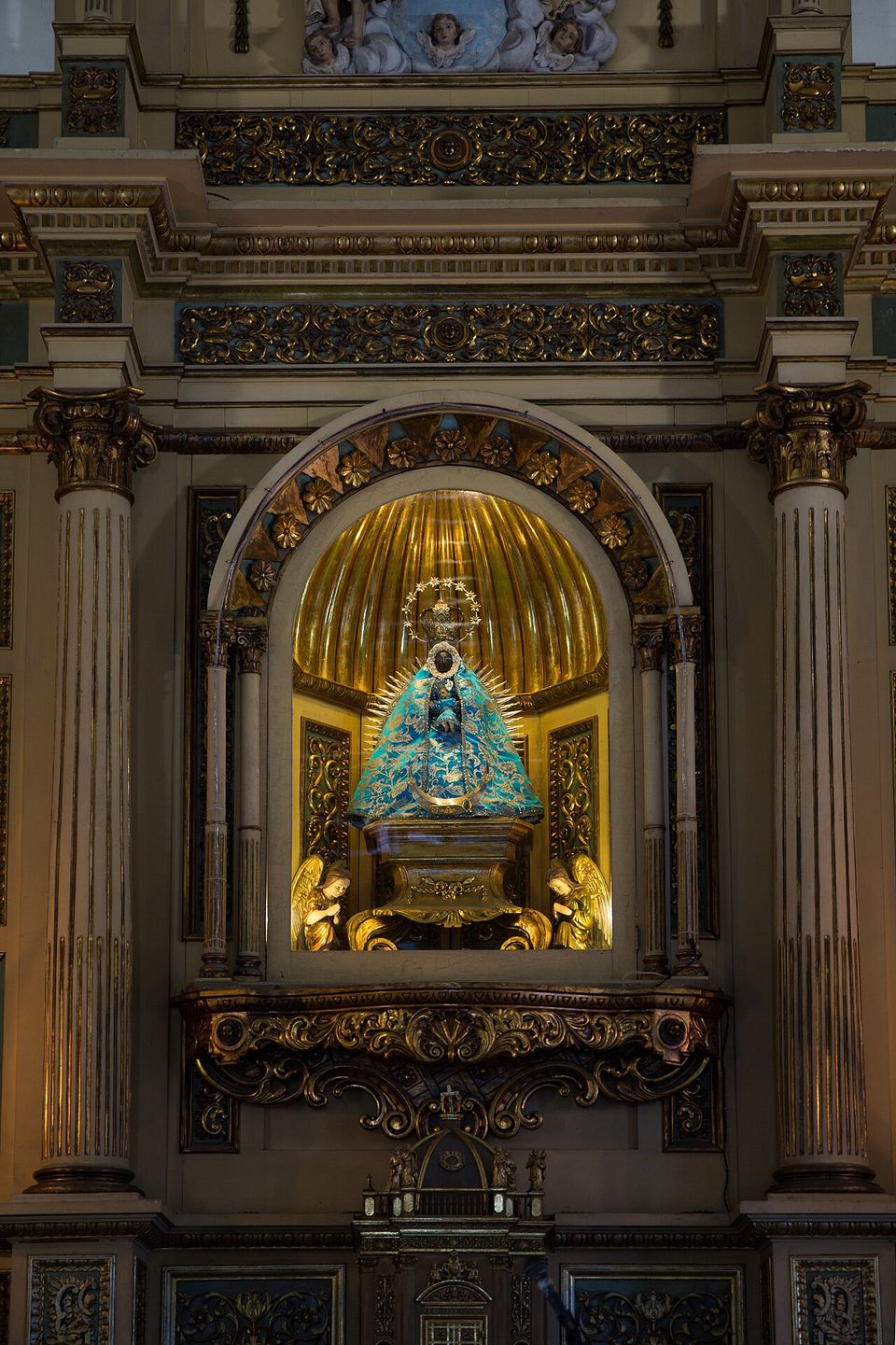
- Cuba's patron saint is the Virgin of Charity of El Cobre (Virgen de la Caridad del Cobre). Her feast day is September 8.
How many believers there are
The last census, in 2012, had no question on religion. The U.S. State Department says in its 2023 religious freedom report that there is no independent, authoritative source on the size of religious groups. These are the most-quoted estimates:
- Catholics: 60% of the population identifies as Catholic, by the Church's own estimate. The State Department and the U.S. commission USCIRF repeat that figure.
- Protestants and evangelicals: about 5%, according to the State Department (2023). Pentecostals and Baptists are probably the largest groups.
- All Christians: 60.7% in 2020, according to the Pew Research Center. Pew's figures are modeled, because Cuba has almost no public survey data.
- Religiously unaffiliated: 21.6% in 2020, according to Pew.
- Afro-Cuban religions: there is no reliable figure. Some sources quoted by the Associated Press in 2023 estimate that as many as 70% of Cubans practice at least some aspects of Santería. Initiates are far fewer: a Cuban study from the early 2000s put them at about 8%.
These figures measure different things and can't be added together. Many people baptized as Catholics also practice an Afro-Cuban religion, and some of those religions require Catholic baptism for initiation.
What the law says
The relationship between the State and religion changed three times in half a century:
- 1976 Constitution. The State based its activity on "la concepción científica materialista del universo" (the scientific materialist conception of the universe). It recognized freedom of conscience, but made it illegal to set faith against the Revolution. This is why Cuba is often described as an atheist state in that period, although the text doesn't use the word.
- 1991 and 1992. The Communist Party's Fourth Congress, in October 1991, accepted religious believers as members. The 1992 constitutional reform removed the reference to materialism, separated religious institutions from the State and banned discrimination on religious grounds.
- 2019 Constitution. Article 15 says: "El Estado reconoce, respeta y garantiza la libertad religiosa. El Estado cubano es laico" (The State recognizes, respects and guarantees religious freedom. The Cuban State is secular). Article 57 gives every person the right to hold religious beliefs or none, to change them, and to practice the religion of their choice, with respect for others and in accordance with the law.
In practice:
- Religious groups register as associations with the Ministry of Justice.
- The Communist Party's Office of Religious Affairs (Oficina de Atención a los Asuntos Religiosos) deals with the churches. According to the State Department, groups must ask its permission for activities such as building or repairing places of worship, importing religious literature or receiving foreign visitors.
- In March 2022 the Council of Ministers also created a government department for religious institutions and fraternal associations, according to Cuba's Foreign Ministry.
- We found no specific law on worship: religious associations fall under the 1985 Law of Associations.
In 2022 the Foreign Ministry reported more than 1,850 recognized religious institutions and fraternal associations, with over 1.5 million members.
The Catholic Church
Catholicism arrived with Spanish colonization. The first diocese was created in Baracoa in 1518 and soon moved to Santiago de Cuba. Today the Church has 11 jurisdictions: the archdioceses of Havana, Camagüey and Santiago de Cuba, and eight dioceses.
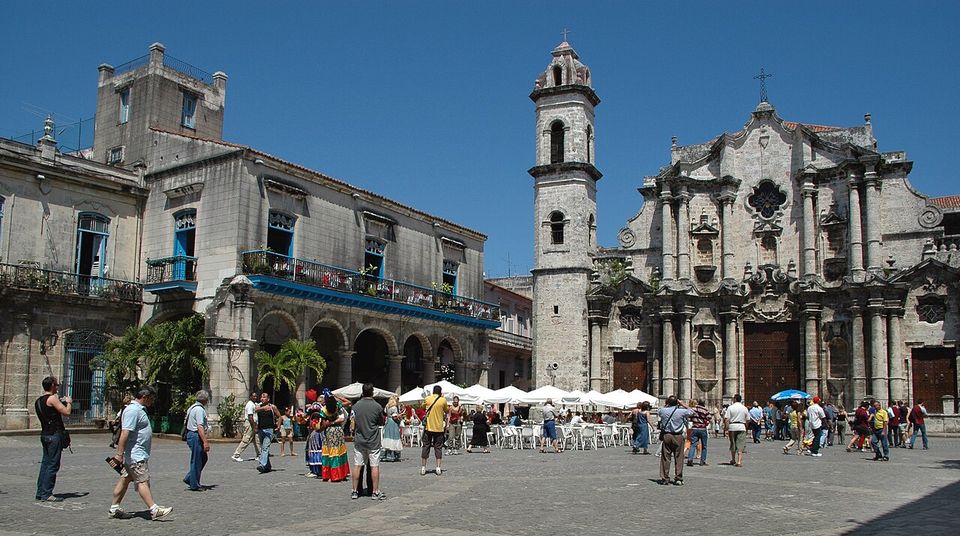
After 1959, relations with the State were tense. In 1961 Catholic and other private schools were nationalized, processions were suspended, and more than a hundred priests and members of religious orders were expelled to Spain. Relations improved from the 1990s, especially after the papal visits.
The Virgin of Charity of El Cobre
She is Cuba's best-loved devotion, on the island and abroad. Many Cubans call her Cachita.
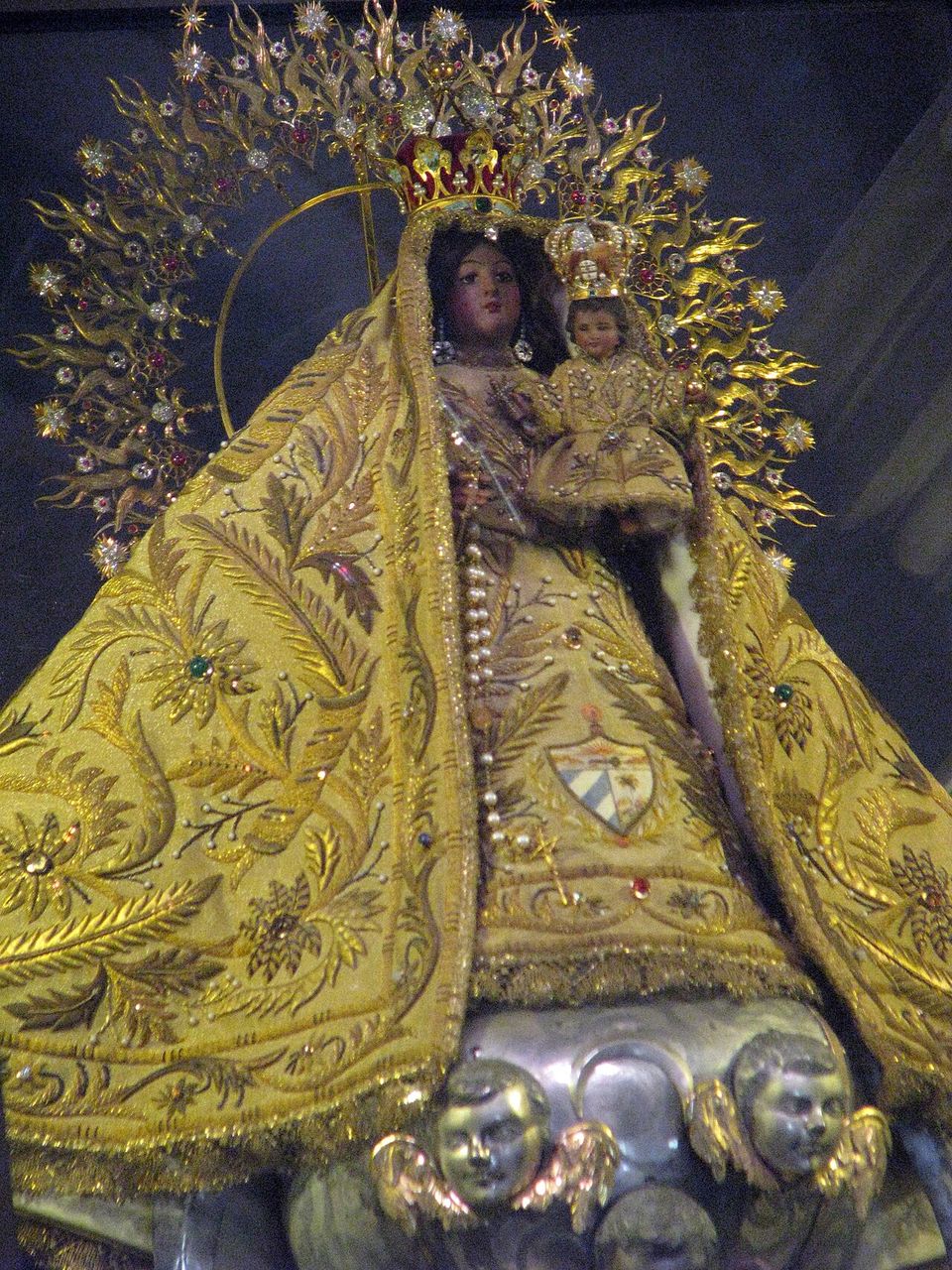
- The finding. According to tradition, three men found the statue floating in the Bay of Nipe around 1612. They are known as "los tres Juanes" (the three Juans): the Indigenous brothers Juan and Rodrigo de Hoyos and the enslaved boy Juan Moreno.
- Patroness of Cuba. Veterans of the independence wars petitioned the pope in 1915, and Benedict XV declared her patroness on May 10, 1916. Because of her link with the independence fighters (mambises), she is also called the Virgen Mambisa.
- Coronations. The archbishop of Santiago crowned the statue in December 1936. John Paul II crowned it again in person on January 24, 1998.
- The shrine. It stands in the town of El Cobre, about 20 km (12 miles) from Santiago de Cuba. The present building opened in 1927 and has been a minor basilica since 1977. See our Santiago de Cuba guide.
- Her feast day is September 8, with processions in El Cobre and at the church of La Caridad in Centro Habana. It isn't a public holiday.
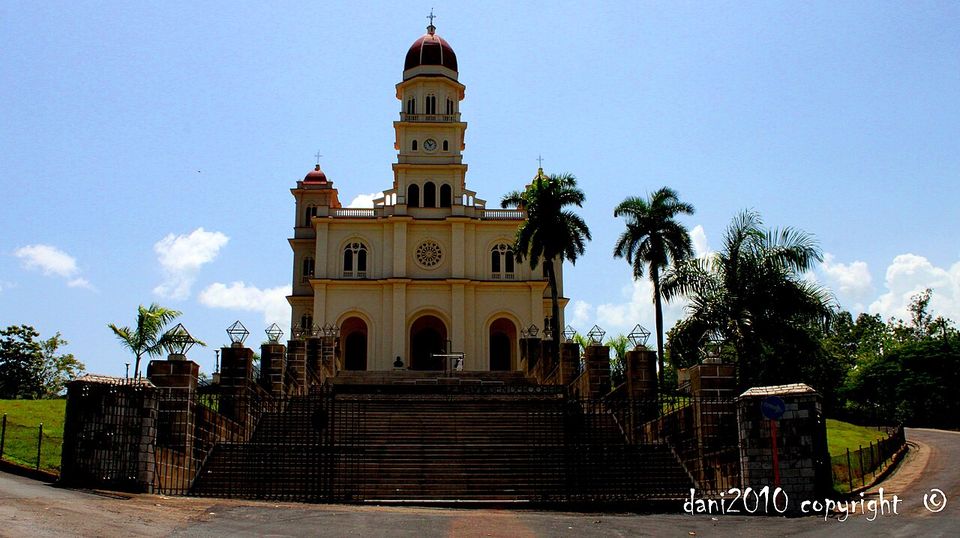
In Miami, Cubans honor her at the Ermita de la Caridad shrine.
Papal visits
- John Paul II, in January 1998. It was the first visit by a pope to Cuba.
- Benedict XVI, March 26–28, 2012, in Santiago de Cuba, El Cobre and Havana.
- Francis, September 19–22, 2015, in Havana, Holguín, Santiago and El Cobre. In February 2016 he returned to Havana's airport to meet Patriarch Kirill of Moscow, in the first meeting ever between a pope and a Russian patriarch.
As of November 2026, we found no announced visit by Pope Leo XIV.
Christmas and Good Friday
- December 25. The Christmas holiday was suspended in the late 1960s. Fidel Castro restored it as a one-off in 1997, ahead of John Paul II's visit, and Decreto-Ley 189 made it permanent in December 1998.
- Good Friday. It was an exceptional day off in 2012 and 2013, after Benedict XVI asked for it. The Labor Code (Ley 116) made it a yearly day off work (día de receso laboral), in force since 2014.
You can see these and other dates in our calendar.
Who leads the Church today
Cardinal Juan de la Caridad García Rodríguez has been archbishop of Havana since 2016. On November 7, 2026, Pope Leo XIV accepted the resignation of the archbishop of Santiago de Cuba, Dionisio García Ibáñez, and named Juan Gabriel Díaz Ruiz, until then bishop of Matanzas, to succeed him.
Afro-Cuban religions
Enslaved Africans brought their religions to Cuba and kept them alive, partly through the cabildos de nación, associations of people of the same origin. Over time these religions mixed with Catholicism and Spiritism. They have no central authority: they are organized in houses and religious families.
Santería, or Regla de Ocha
- Origin. It comes from the religion of the Yoruba of West Africa, who were called Lucumí in colonial Cuba.
- The name. "Santería" is the best-known name, but many practitioners prefer Regla de Ocha, Regla de Ocha-Ifá or Lucumí.
- The deities are the orichas (orishas), also called santos. The supreme creator is Olodumare.
- The priests are santeros and santeras. Babalawos are the priests of Ifá, the divination system.
- Initiation is known as "hacerse santo" (making saint). A new initiate is an iyawó and spends a year under restrictions that usually include dressing entirely in white.
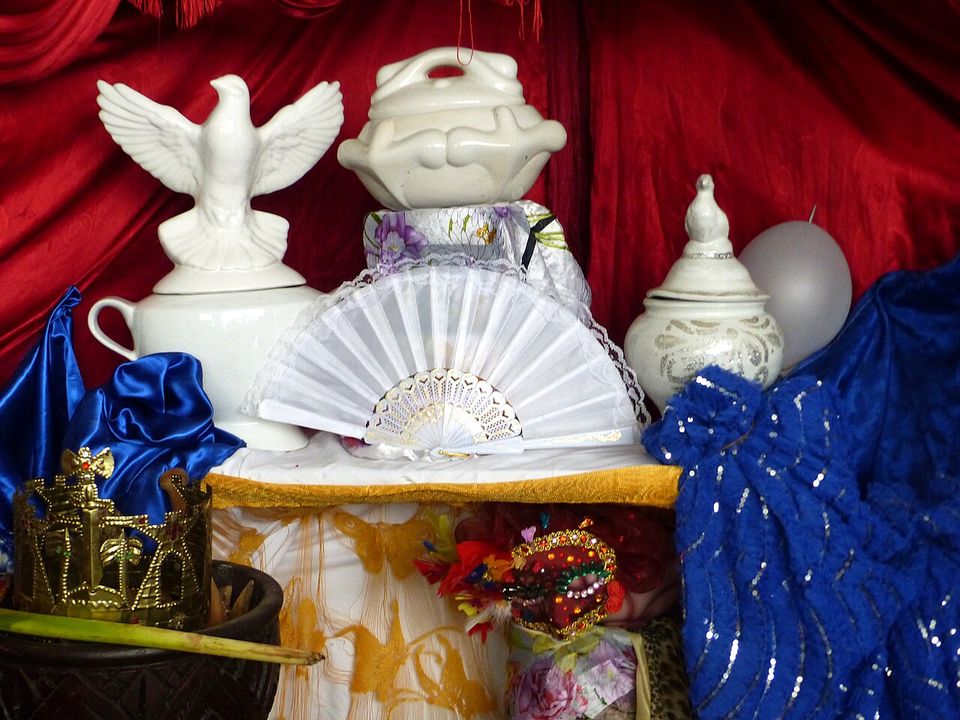
Saints and orichas
In colonial times the orichas came to be identified with Catholic saints. Their feasts fall on the same dates, although the main rituals take place in the houses of worship (casas de santo), not in church.
- Ochún and the Virgin of Charity of El Cobre: September 8. Her color is yellow.
- Yemayá and the Virgin of Regla: September 7. Her colors are blue and white.
- Obatalá and Our Lady of Mercy (Virgen de las Mercedes): September 24. His color is white.
- Changó and Saint Barbara: December 4.
- Babalú Ayé and Saint Lazarus: December 17.
The Letra del Año
Every December 31, groups of babalawos consult the Ifá oracle to find the sign that will rule the coming year, with its orichas and advice. This is the Letra del Año (Letter of the Year). For years there were two letters: one from the Asociación Cultural Yoruba de Cuba and one from the Comisión Organizadora de la Letra del Año "Miguel Febles Padrón". From 2016 to 2020 they issued a joint letter. According to Cuban media, two letters have appeared again since then, including in 2026.
Palo Monte
Also called Regla Conga or Reglas de Congo. It comes from the religions of the Bantu-speaking peoples of Central Africa. Its practitioners are paleros and paleras, and its central object is the nganga, or prenda.
Abakuá
Abakuá is an initiatory brotherhood for men only, which also works as a mutual aid society. It derives from the Ékpè society of the Cross River region, between today's Nigeria and Cameroon, whose peoples were known in Cuba as Carabalí. The most accepted founding date is 1836, in Regla. Its masked dancers are the íremes, or diablitos. Cuban words such as asere and ecobio come from Abakuá: see our guide to Cuban words.
Other traditions
- Arará: of Dahomean (Ewe-Fon) origin, centered in Matanzas.
- Vodú: brought by Haitian migrants and practiced mainly by their descendants in eastern Cuba.
- Espiritismo (Spiritism): based on the ideas of the Frenchman Allan Kardec, which spread in Cuba in the 19th century. It has local forms, such as espiritismo de cordón.
Protestant and evangelical churches
According to the State Department (2023), the groups reporting the most members are:
- the Assemblies of God, with about 150,000;
- the four Baptist conventions, with more than 100,000 combined;
- the Methodists, with about 50,000;
- the Seventh-day Adventists, with about 36,000;
- the Presbyterians, with about 25,000.
The Cuban Council of Churches (Consejo de Iglesias de Cuba), founded in 1941, brings together 28 denominations. Many evangelical churches don't belong to it. Congregations without a church building meet in private homes, known as casas culto (house churches), which are regulated.
Evangelical churches have become more visible in public life. In 2018, several denominations opposed the article in the draft Constitution that defined marriage as the union of two persons. The article was withdrawn, and the final text left the definition to the law. In 2022 they also opposed the Family Code, which legalized same-sex marriage and passed in a referendum with about 67% of the vote.
Other communities
- Jehovah's Witnesses: their official site counts more than 83,000 members and 1,283 congregations. They operate without legal registration: according to the State Department, their application is still unanswered.
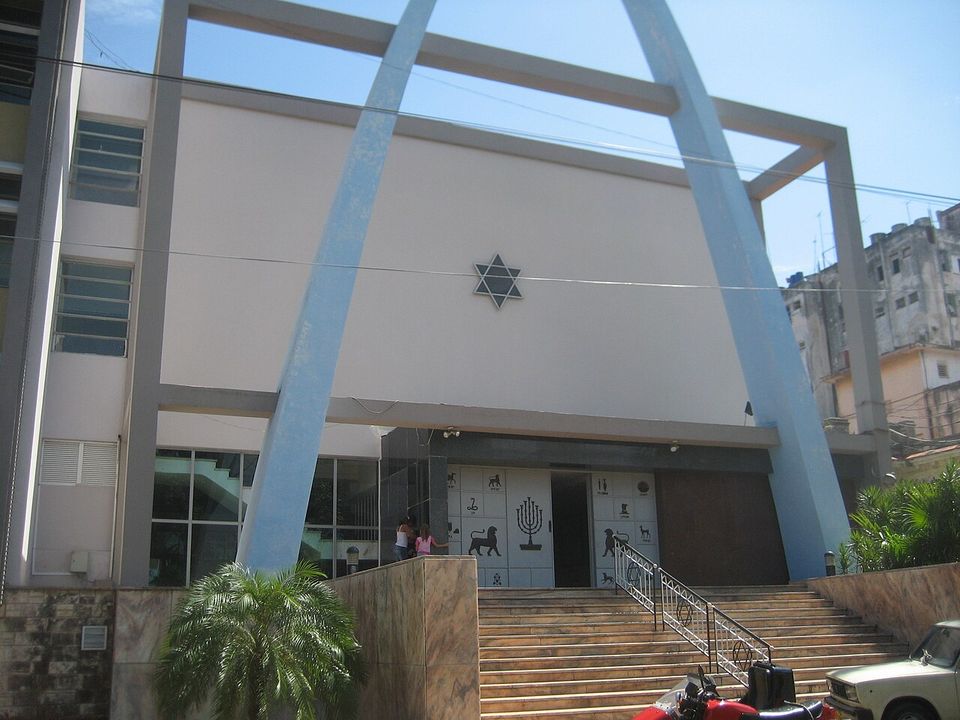
- Jews: between 600 and 1,200 people depending on the source, most of them in Havana. The capital has three synagogues: Beth Shalom (known as El Patronato), Adath Israel and the Centro Hebreo Sefaradí. Most of the community emigrated after 1959.
- Muslims: between 8,000 and 13,000 depending on the source. The Abdallah Mosque, Havana's only mosque, opened in 2015 in Old Havana.
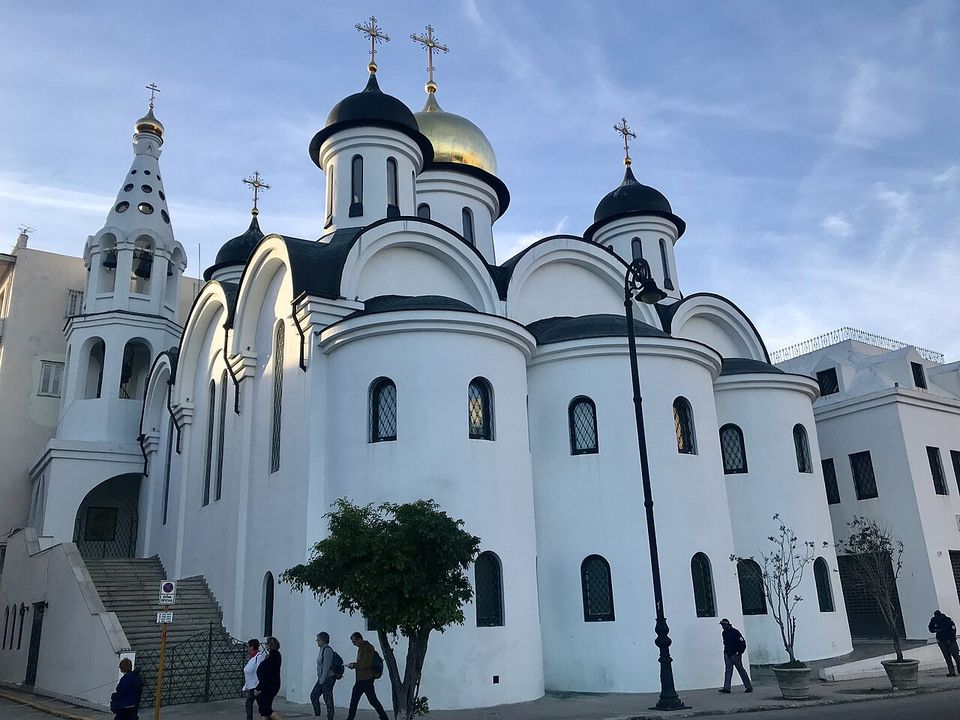
- Orthodox Christians: Old Havana has a Greek Orthodox cathedral, San Nicolás (2004), and a Russian one, Our Lady of Kazan (2008).
- Buddhists: the State Department estimates about 6,200. Soka Gakkai is the only registered organization.
- Freemasons: Freemasonry isn't a religion. The Constitution lists it among "fraternal associations". It has a long history in Cuba, with about 22,000 members and more than 300 lodges, according to the Associated Press (2025).
Religious freedom: two readings
The Cuban government says religious freedom is guaranteed. In a 2022 submission to the United Nations, the Foreign Ministry said religious institutions carry out their activities "con total independencia y autonomía" (with full independence and autonomy). It added that the U.S. government openly uses religious faith for political ends. Foreign Minister Bruno Rodríguez wrote in December 2022: "Es sabido que en Cuba sí hay libertad religiosa" (It is well known that there is religious freedom in Cuba).
The U.S. State Department says in its 2023 report that the Constitution protects religious freedom, but that "provisions in the penal and administrative codes contravene these protections". According to the report, all public religious activity is subject to state approval. The department last designated Cuba a "country of particular concern" on December 29, 2023. The same report notes that the Catholic Church and recognized Protestant groups run publications and websites "with little or no formal censorship".
USCIRF, a U.S. federal advisory commission, wrote in its 2026 report that religious freedom conditions in Cuba "remained poor" in 2025, and recommended keeping the designation. CSW, a British religious freedom advocacy group, said it documented 667 cases of violations between January 2025 and June 2026.
The World Council of Churches gave a different assessment: its general secretary, Jerry Pillay, visited Cuba in December 2023 and voiced appreciation for religious freedom in the country.
Places to visit
- Shrine of the Virgin of Charity, El Cobre, near Santiago de Cuba. Devotees bring sunflowers and leave offerings in the Capilla de los Milagros (Chapel of Miracles).
- National Shrine of San Lázaro, in El Rincón, south of Havana. Thousands of pilgrims arrive every December 17. Some come barefoot or on their knees to keep a promise.
- Church of Nuestra Señora de Regla, across Havana Bay. Its Black Virgin is identified with Yemayá, and devotees wear blue.
- Havana Cathedral, in Old Havana, completed in 1777. More in our Havana guide.
- Museo Municipal de Guanabacoa, with a collection on Afro-Cuban traditions. Check that it is open before you go.
- Casa de África, on Calle Obrapía in Old Havana, with objects from the Afro-Cuban religions.
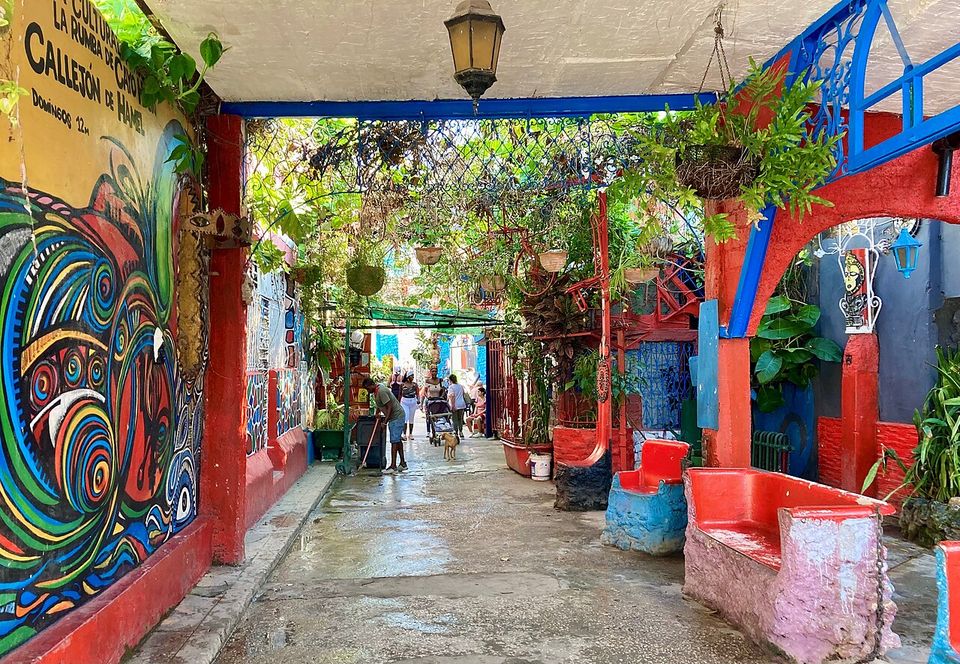
- Callejón de Hamel, in Centro Habana, with murals by Salvador González Escalona inspired by Afro-Cuban culture.
If you attend a ceremony
- Ask permission before watching or taking photos. Many practices are private, and initiates don't discuss certain subjects with outsiders.
- People dressed in white from head to toe are often iyawós in their initiation year. Treat them with respect and don't photograph them without permission.
- Dress as you would for church.
- Avoid words like "witchcraft" or "cult". For the Abakuá, the respectful terms are "society" or "brotherhood".
Religious festivals and dates
- January 6: Día de Reyes (Three Kings' Day). In colonial times, this was the day the African cabildos paraded through the streets.
- Holy Week: the date varies. Good Friday is a day off work.
- September 7: Virgin of Regla.
- September 8: Virgin of Charity of El Cobre, patroness of Cuba.
- September 24: Our Lady of Mercy.
- December 4: Saint Barbara.
- December 17: Saint Lazarus and the pilgrimage to El Rincón.
- December 24: the Parrandas of Remedios, a popular festival that UNESCO inscribed as intangible heritage in 2018.
- December 25: Christmas, a public holiday.
- December 31: the Letra del Año.
Frequently asked questions
What is the main religion in Cuba?
Catholicism has the most declared followers: the Church estimates that 60% of Cubans identify as Catholic. Afro-Cuban religions are widespread and are often practiced alongside Catholicism.
Is Cuba an atheist state?
No. The 2019 Constitution says the Cuban State is secular and recognizes religious freedom. The 1976 Constitution based the State on a materialist worldview, and that reference was removed in 1992.
What is Santería?
It is a religion of Yoruba origin that took shape in Cuba and venerates the orichas. Many practitioners prefer to call it Regla de Ocha or Lucumí.
Who is the patron saint of Cuba?
The Virgin of Charity of El Cobre, declared patroness by Pope Benedict XV in 1916. Her shrine is in El Cobre, near Santiago de Cuba, and her feast day is September 8.
Is Christmas celebrated in Cuba?
Yes. December 25 has been a permanent public holiday since 1998.
How many Cubans practice Santería?
There is no reliable figure. Some estimates say up to 70% practice some aspect of it, but initiates are far fewer.
Last reviewed: November 2026.