Studying in Cuba as a Foreigner: Degrees, Postgraduate Study, Medicine and Scholarships
How to study in Cuba: self-financed degrees and postgraduate study, medicine and ELAM, published prices, scholarships, documents, visa and temporary residence, and getting your degree recognized.
Updated November 28, 2026
Cuba has taken foreign students for decades, above all in medicine. Today there are two ways in: a scholarship agreed between governments, or paying for your studies, which Cuba calls self-financed (autofinanciado) study. This guide explains how each route works, which prices have been published, which documents are required, and what changed with the migration laws of November 2026.
This guide is for information only. Prices and requirements change, and several official Cuban websites can't be reached from outside the country. Confirm your case with the university and the Cuban consulate before you pay or travel.
In short
- There is no central admissions portal. Each university handles applications through its international relations office.
- Health sciences are the exception: all self-financed applications go through Comercializadora de Servicios Médicos Cubanos.
- Medicine costs 55,000 USD for the six years, according to the 2025 undergraduate call.
- Scholarships are allocated through agreements between governments and designated organizations. We found no scholarship that an individual can request directly from a Cuban university.
- Cuba isn't a party to the Apostille Convention. Your documents need legalization at a Cuban consulate.
- You study as a temporary resident, and the university files the application, not you.
- The energy crisis affects teaching: in 2026 many universities moved to a part-distance model.
How to get into a Cuban university
The University of Havana lists these routes for foreign students:
- Government agreements, for undergraduate and postgraduate study.
- Government-financed places.
- Self-financed study, undergraduate and postgraduate. Some universities call it pregrado compensado.
- Fee-exempt places under ministerial agreements.
- One-semester courses, under an agreement or self-financed.
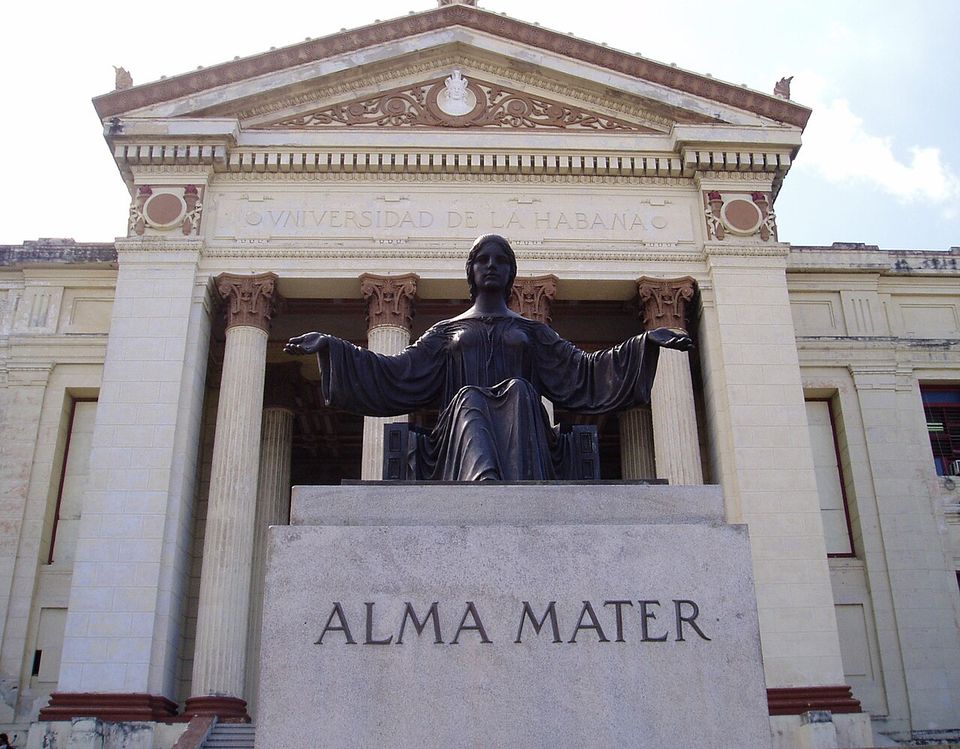
Foreigners with permanent residence in Cuba have the same right to enter higher education as Cuban citizens, according to the Universidad de Oriente.
Where to apply
- Non-medical degrees and postgraduate programs: at each university's international relations office. The Universidad Central de Las Villas (UCLV), for example, sells its academic services through its company SICTE.
- Medicine, dentistry, nursing and health technologies: at Comercializadora de Servicios Médicos Cubanos (SMC), the only body authorized to handle self-financed health studies.
The Ministry of Higher Education (MES) publishes national catalogs of degrees and postgraduate programs on its site, but no admissions page for foreigners and no price list.
Language and calendar
- Classes are in Spanish. If you don't speak it, you take a preparatory course first. It lasts one year at UCLV and 20 weeks at the medical universities.
- The academic year starts in September. Medical specialties also have a January intake.
- Length of degrees: most last 4 or 5 years. Medicine lasts 6.
Postgraduate study: master's degrees, doctorates and courses
Cuban postgraduate study has two branches:
- Professional development: courses, training placements and diplomados (diploma courses).
- Academic programs: specialties, master's degrees (maestrías) and doctorates.
Useful facts:
- A master's or specialty has a minimum of 60 credits and can be completed in one year full time. Each edition lasts three years at most.
- A doctorate lasts up to four years at UCLV. Foreign doctoral candidates must spend at least one year in Cuba during their studies.
- You need a university degree to enter. If it isn't Cuban, it must be legalized and recognized by MES (explained below).
- Many master's programs in the MES catalog are part time or part distance.
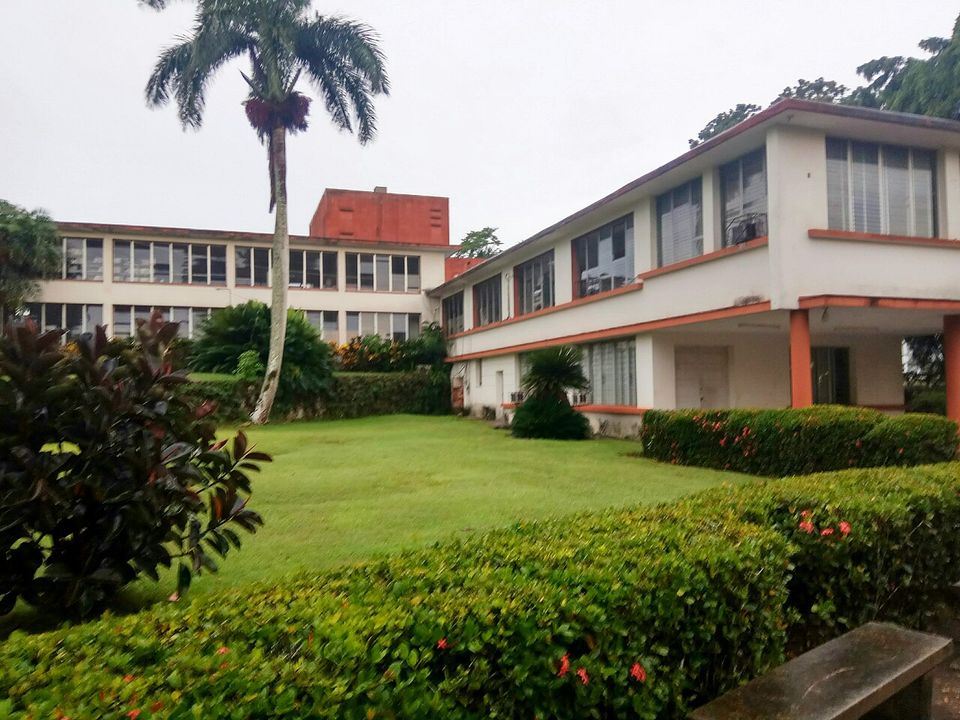
Prices: we found no published price lists for non-medical master's degrees or doctorates at any university. You have to ask each one. For doctorates, UCLV signs a contract and charges by stage.
Spanish and summer courses
The University of Havana runs an International Summer School. The 2026 edition ran from June 29 to July 17, with Spanish courses for beginners and intermediate students. In-person prices were 150 USD for a one-week course, 250 USD for two weeks and 480 USD for three weeks with excursions. Lodging wasn't included.
We found no official prices for the Spanish courses the university offers during the year.
Studying medicine in Cuba
Paying: the Servicios Médicos Cubanos call
SMC's 2025 undergraduate call is the most recent document we found. Fourteen medical universities take students, from Pinar del Río to Guantánamo, including ELAM.
2025 prices, in U.S. dollars:
- Medicine (6 years): 55,000 in total. You pay by year: between 8,000 and 11,000.
- Dentistry (Estomatología, 5 years): 50,000.
- Nursing degree (5 years): 33,000.
- Health technologies (4 to 5 years): 32,000 to 33,000.
- Preparatory Spanish course (20 weeks): 2,400.
- Pre-medical course, optional (20 weeks): 2,400.
- Student residence with three meals: 6.85 a day. Rooms are shared, with bunk beds and communal bathrooms.
How to apply and pay:
- You can apply all year by email, with a form and a CV. Applying is free, and the answer takes about 30 days.
- You pay in advance, each year, in full or in three installments.
- Cash and transfers in U.S. dollars aren't accepted. Prices are in dollars, but you must transfer the equivalent in euros, Canadian dollars or another currency.
- The price covers enrollment, classes, exams and the degree certificate. It doesn't cover books, transport, internet, migration paperwork or legalizing the degree at the Foreign Ministry.
- If you live outside the residence, it must be in a hotel or a licensed rental house.
The call lists 40 health conditions that bar entry to medical degrees, including HIV, tuberculosis and epilepsy that is hard to control.
Medical specialties (postgraduate). The last price list we found is from 2022–2023, so it may have changed. It gave 12,000 to 23,000 USD a year depending on the specialty, plus a 1,000 USD enrollment fee; master's degrees at 8,000 to 10,000 USD in total; and a doctorate at 12,000 USD.
On a scholarship: ELAM
The Latin American School of Medicine (ELAM), founded in 1999, has graduated more than 31,000 doctors from over 120 countries. Scholarships are allocated country by country, through Cuban embassies, governments and partner organizations. We found no open call that you can apply to directly.
For U.S. citizens, the only route is the organization IFCO/Pastors for Peace. According to its page:
- Requirements: be 18 to 25 years old (with exceptions up to 30), be a U.S. citizen and have finished high school. Green-card holders aren't eligible.
- What it covers: tuition, dormitory housing, three meals a day, textbooks in Spanish and a small stipend in Cuban pesos.
- What it doesn't cover: travel and U.S. licensing exam fees.
- Length: up to seven years, counting Spanish, a pre-medical semester and the six-year degree.
Its page was accepting applications when we checked in November 2026.
Scholarships
Cuban universities describe scholarships as part of agreements between governments. For example, Cuba and Vietnam grant each other 15 scholarships a year, and Colombia received 1,000 medical scholarships after its peace agreement.
What to do if you want a scholarship:
- Ask your country's education or foreign ministry and the Cuban embassy. If an agreement exists, the call is announced there.
- Check your own government's scholarships for study abroad. Mexico, for example, ran a 2025 call for medical specialties in Cuba.
Documents and requirements
Universities ask for a similar list:
- Diploma and transcript from your previous level: secondary school for a degree, a university degree for postgraduate study.
- Valid passport.
- Health certificate, including an HIV test. For health degrees it is valid for three months, and women are also asked for a certificate of non-pregnancy.
- Criminal record certificate.
- Birth certificate.
- Ten photos, 1 x 1 inch.
- For postgraduate study, also an application letter and a CV.
Legalization: Cuba doesn't use the apostille
Cuba isn't a party to the Hague Apostille Convention. Your documents must therefore be legalized at the Cuban consulate in your country, and then at the Foreign Ministry (MINREX) in Cuba. For postgraduate study, MES also recognizes your foreign degree.
Start this early: it is usually the slowest step.
Health insurance
You need health insurance. SMC requires a policy from the Cuban insurer ASISTUR, bought before travel or in your first week. If you bring a foreign policy, ASISTUR decides whether it is valid.
Visa and temporary residence
New migration laws have applied since November 1, 2026. We sum them up in our migration law guide. For students, the rules are in Decreto 136/2025:
- Category: foreign students and scholarship holders are temporary residents. This includes self-financed students (article 99).
- Who applies: the university files the application, not the student (article 114). The file includes your passport, visa and proof of lodging.
- Length: the duration of your studies, up to five years, renewable (article 111). The foreigner's identity card is issued for one year.
- Work: you can't do activities other than those approved. Working requires a permit (articles 110 and 112).
- When you finish your studies, the residence is canceled and you must leave the country.
The visa. The university asks the migration authorities to admit you, and the consulate issues the visa. SMC calls it an "academic visa" and asks you to request it at least 30 days before travel. The new regulation says 90 days. Both allow you to enter on a tourist visa and change status in Cuba. Some older guides call it a "D-2 visa", a name that doesn't appear in the current rules.
You must arrive at least 10 days before the course starts, for the health check and the paperwork.
If you are Cuban and live abroad
We found no rule or official page that says on what terms a Cuban living abroad can enroll in Cuba, or whether they pay. The new migration laws don't cover it.
What the rules do provide for is a Cuban with a degree earned abroad having it recognized by MES in order to do postgraduate study in Cuba. If this is your case, ask the university directly.
If you are from the United States
Studying in Cuba is limited by U.S. sanctions. The Treasury Department (OFAC) narrowed the general license for educational activities on September 30, 2026. According to the text of the rule (31 CFR 515.565):
- It covers students enrolled at an accredited U.S. university, with a letter from that university, for courses of at least 10 weeks that count toward their U.S. degree.
- Other people must travel under a U.S. organization and be accompanied by its representative.
- Enrolling on your own in a full Cuban degree isn't on the list. The rule allows specific licenses to be requested case by case.
U.S. cards and banks also don't work for payments in Cuba. Talk to a lawyer who knows Cuba sanctions before you commit.
Getting your Cuban degree recognized abroad
Legalization in Cuba
- The university hands over the degree and transcript, legalized by the university.
- They then go through MES (or the Ministry of Public Health for medical degrees) and MINREX.
- Because Cuba doesn't issue apostilles, the last step is usually the consulate in Cuba of the country where you'll use the degree.
- For personal requests, MES says to go through a legal-services body such as Consultoría Jurídica Internacional. MES doesn't charge; the legal-services body does. Since late 2025, fees for foreigners and Cubans living abroad are charged in foreign currency. Cuban media quote 260 USD to certify grades or a degree, but we couldn't read the resolution: confirm the price.
Spain
Medicine is a regulated profession, and the degree is recognized (homologación) by the Ministry of Science, Innovation and Universities. The degree and transcript must be legalized. Recognition lets you work as a general doctor in the private sector. Working in public health care or as a specialist requires the MIR exam or recognition of the specialty.
United States
Physicians need ECFMG certification, which requires the school to be listed in the World Directory of Medical Schools with an ECFMG note. Check your university's entry in that directory yourself before you enroll. For other degrees, private credential evaluators are used, such as those listed in our Education category.
Italy and Mexico
In Italy you request the Dichiarazione di valore from the Italian embassy in Havana, or a statement from the CIMEA center. In Mexico, the Ministry of Public Education (SEP) handles revalidation.
What studying in Cuba is like today
The 2026 energy crisis changed university life:
- Part-distance teaching. In February 2026 the University of Havana sent its students home, according to the Spanish outlet El Salto, which reported blackouts of up to 20 hours. MES said in March that it had moved 7,879 students to study in their home municipalities and cut course content to the essentials.
- The 2026–2027 year. It began in September under the same model at several universities. The authorities attribute this to fuel shortages caused by U.S. sanctions.
- Internet. Mobile data prices rose in May 2025, which led to student protests. Without electricity, the connection isn't stable either.
- Money. Work out how you will pay before you go: universities don't take cash. Read our guide to currencies and exchange rates.
Before you decide, ask the university to explain in writing how classes in your program are being taught, and talk to foreign students who are there now. For general conditions in the country, see our guide to traveling to Cuba.
Frequently asked questions
Is studying in Cuba free for foreigners?
No, unless you have a scholarship. Self-financed study is paid: medicine costs 55,000 USD for six years, according to the 2025 call.
How do I get a scholarship to study in Cuba?
Scholarships are allocated through agreements between governments. Ask your country's education ministry and the Cuban embassy.
How much does it cost to study medicine in Cuba?
55,000 USD for the six years, plus 6.85 USD a day if you live in the residence with meals, according to the 2025 call from Servicios Médicos Cubanos.
Can I do postgraduate study in Cuba?
Yes. Universities offer self-financed master's degrees, specialties and doctorates. You need your degree legalized and recognized by MES. You have to ask each university for prices.
Do I need an apostille on my documents?
An apostille won't work, because Cuba isn't a party to the convention. You must legalize them at the Cuban consulate in your country.
What visa do I need to study in Cuba?
A visa for the temporary resident category as a student. The university that admits you arranges it.
Last reviewed: November 2026.